ServicesGutters
Gutters in Palm Valley, Sized to the Water Your Roof Sheds
We install and repair one-piece aluminum gutters and downspouts matched to the runoff your roof produces. The same small crew measures, builds and finishes your job, so the person who sized your system is the one who checks its pitch with running water before leaving.
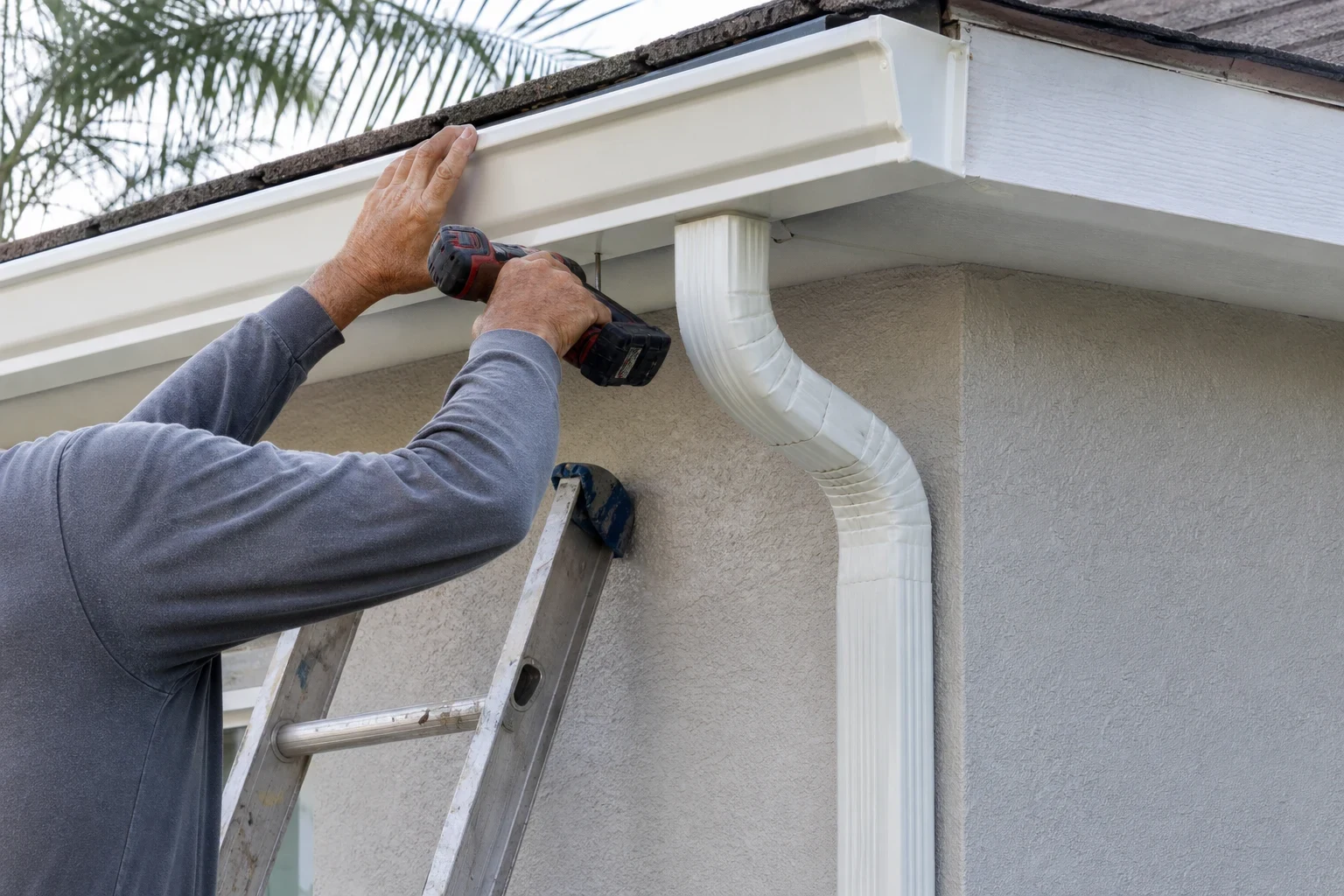
What a Gutter System Actually Has to Do
Every square foot of shingle or metal panel on your roof pushes water toward the eaves. From there the gutter takes over: it catches that flow, moves it to a downspout and releases it far enough out that the soil along your slab stays dry. When one link breaks, water finds its way behind the fascia, spills over the front lip or collects at the foundation.
New gutters are the right call when the old ones are undersized, sectional with leaking joints, pulling away from rotted fascia, or bent by wind. A repair makes sense when the run is sound and only a few hangers, a corner miter or a downspout needs attention. We tell you which one you have and why.
We have been doing this work since 1995, and we keep it to a small team. The people who measure your eaves are the people who hang the gutter, which means nothing gets lost between the estimate and the install.
What Our Gutter Work Includes
Continuous runs formed on site
We roll K-style aluminum from coil in our truck and cut each piece to the full length of its eave. Joints only occur where a run turns a corner or stops at an end cap, and we seal and rivet each one.
Hidden hangers and correct pitch
Hangers screw through the gutter into the fascia board, spaced closer on long runs and on eaves that take valley water. We set a slope of about a quarter inch per ten feet so water moves toward the outlet instead of sitting and breeding mosquitoes.
Downspouts placed by roof area
We count the roof area draining to each run and choose 2x3 or 3x4 downspouts accordingly. Extensions or splash blocks carry the water away from the slab and your planting beds.
Fascia board and drip edge
We press along the fascia on every eave to find wood that has gone soft, and we confirm the roof's drip edge reaches into the gutter instead of stopping behind it. Gutter fastened to decayed board starts to sag within a season, so bad sections are pointed out and priced up front.
Gutter guards when they help
Under pine and oak cover, a screened guard can cut down on clogging. We explain which style suits your trees and roof edge, and we tell you plainly when guards won't earn their cost.
Signs Your Gutters Need Attention
Water sheets over the front edge
If a heavy afternoon storm sends water over the lip, the gutter is undersized, clogged or pitched the wrong way. Each cause has a different fix.
Sagging or gaps at the fascia
A run that dips between hangers holds standing water and pulls harder on the fasteners every rain. Gaps behind the gutter let water run straight down the fascia.
Drips at joints and corners
Sectional gutters leak where their pieces meet as the sealant ages in the sun. Corner miters fail the same way.
Stains, peeling paint or soft wood
Dark streaks under the gutter or paint lifting off the fascia mean water is getting behind the system. Left alone, it rots the board the gutter depends on.
Washed-out mulch or puddles at the slab
Erosion trenches below the eaves show the downspouts aren't carrying enough water, or are dumping it too close to the house.
How a Gutter Job Runs
- 1
Measure and look
We measure every eave, note where valleys concentrate water and check the fascia and drip edge. You'll see photos of anything that affects the job.
- 2
Written estimate
You get a line-item estimate covering gutter size, downspouts, any fascia work and guards if you want them. Financing is available if it helps.
- 3
Install day
Old gutters come down and go in our trailer. We form the new runs on site, hang them, cut in the outlets and attach downspouts and extensions, usually in a single day for a typical home.
- 4
Water test and cleanup
Before we pack up, we feed water from a garden hose into the upper end of every gutter and watch it travel to the outlet. That proves the slope and shows us any corner that weeps. Then we pick up screws, scraps and old sealant before we go.
What Moves the Cost of New Gutters
Gutter pricing comes down to how much material goes up and what has to be fixed underneath it. We measure before we quote, so the number reflects your home rather than an average. Your estimate is free and carries no obligation.
- Linear footage and stories
- Total eave length sets the material. A second story adds ladder setups and time on every run.
- Gutter size and downspout count
- Six-inch gutter and 3x4 downspouts cost more than five-inch and 2x3, but they handle far more water on large or steep roofs.
- Fascia condition
- Rotted boards have to be replaced before new gutter can be fastened. We show you the soft spots before pricing them.
- Guards and extras
- Screened guards, longer extensions and underground drain connections each add to the total. All of them are optional.
Gutter Questions We Hear Often
Something not covered here? (904) 675-1142
Should I get 5-inch or 6-inch gutters?
The answer comes from how many square feet of roof feed each gutter and how steep that roof is. Many homes do fine with 5-inch, but long eaves, steep pitches and runs below a valley often need 6-inch to keep up with a hard summer downpour. We size it from your measurements, not by habit.
Why one-piece gutters instead of sectional ones?
Sectional gutters are pieced together every ten feet or so, and each joint depends on sealant that breaks down in heat and sun. A gutter formed in one length for each eave has none of those mid-run joints. Fewer joints means fewer places to leak and less upkeep.
Should I replace my gutters when I replace my roof?
Often, yes. The gutter has to come off to install new drip edge properly, and putting worn gutters back on a new roof wastes the access. If your gutters are in good shape, we can reinstall them and tell you so. Our roof replacement estimates cover both options.
Do you warranty gutter installation?
Yes. Gutter installation is covered by our 5-year workmanship warranty. We're also a licensed general contractor, so if the fascia behind the gutter needs new wood, we handle that board work as part of the same job.
A storm bent my gutters. Will insurance cover it?
Sometimes, when wind or a falling limb caused the damage and it's part of a larger claim. Our look after a storm costs you nothing, and on a claim we deal with your adjuster ourselves, handing over the photos and measurements we took. Whether it's covered is the insurer's call, but the damage will be on record clearly. Our storm damage repair page explains the rest of the process.
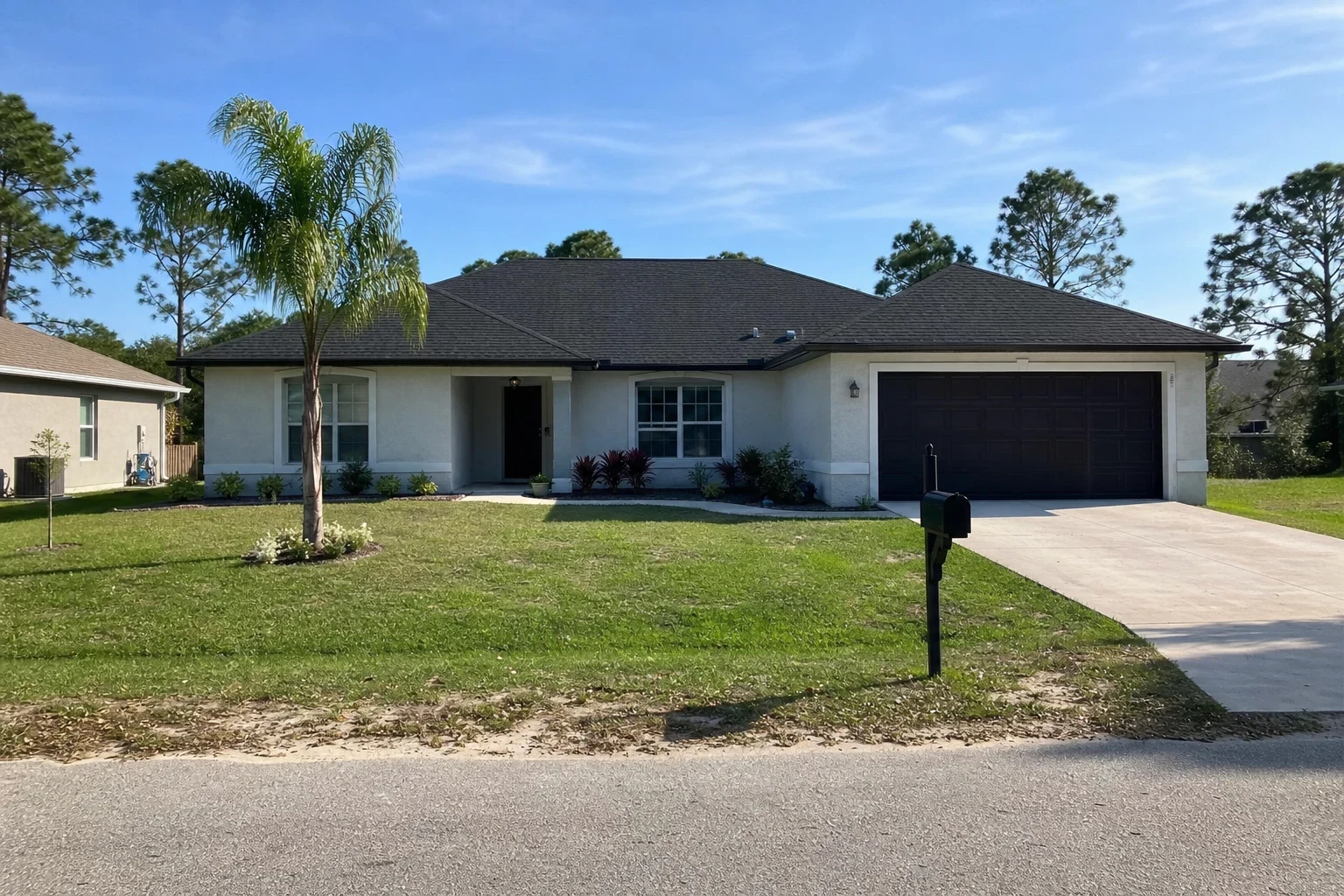
Get Your Gutters Measured
We'll walk your eaves, check the fascia and give you a written estimate for gutters sized to your roof. The same crew you meet is the crew that does the work.