ServicesRoof Replacement
Roof Replacement in Palm Valley
When patching no longer holds, we strip your roof to the deck, fix what is rotted, and build it back with new underlayment, flashing and roofing to current code. The same few people measure it, tear it off, install it and clean up.
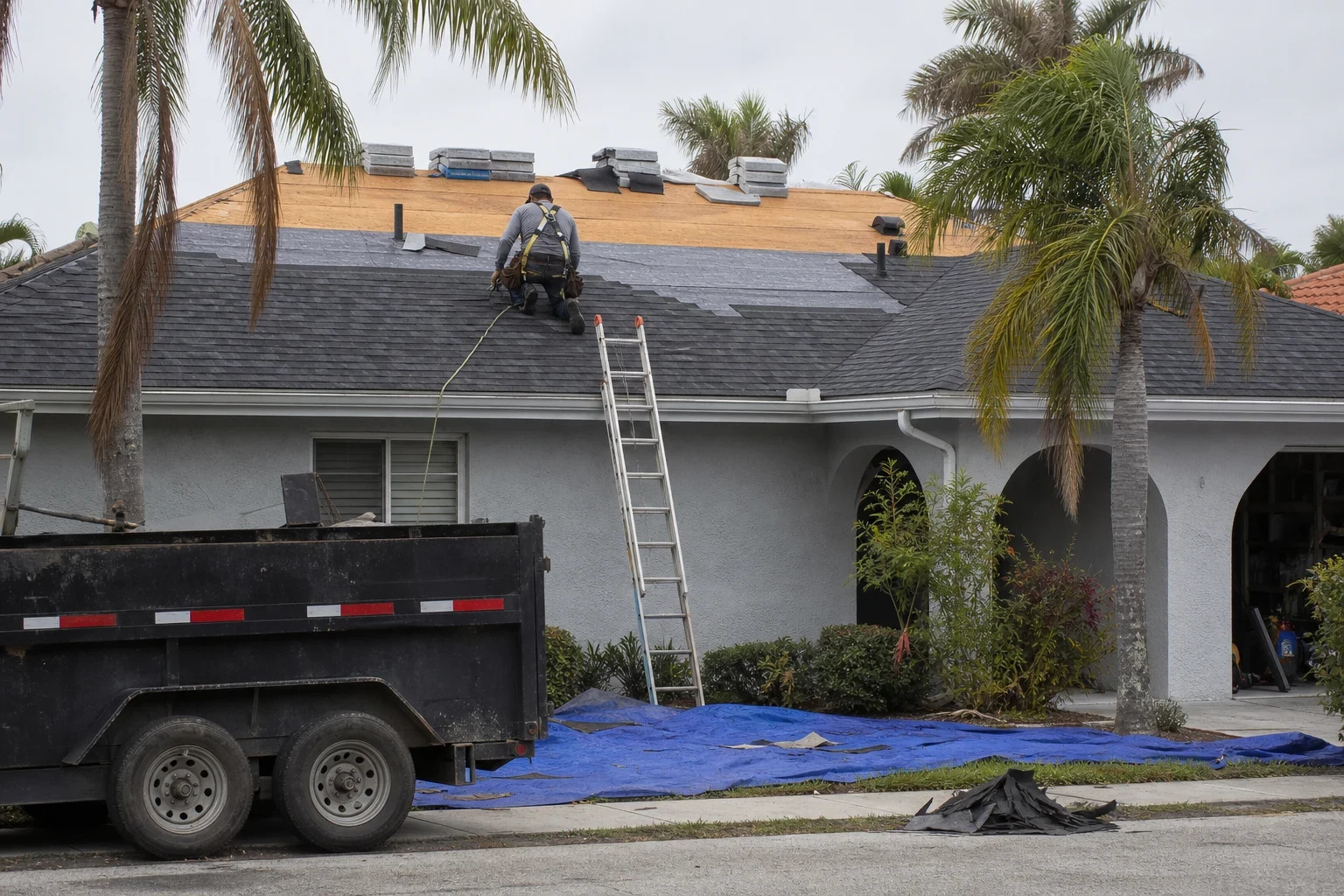
When Replacement Beats Another Patch
Your roof works as a set of layers that depend on each other: decking, underlayment, flashing, ventilation and the outer covering of shingles or metal. Replacement makes sense when several of those layers have worn out together, or when the deck underneath has started to soften. Patching one spot on a roof in that shape usually just sends the water to a new spot a few feet away.
Asphalt shingles here take a hard combination of UV, humidity and wind-driven summer rain. The granules wash off, the asphalt mat dries and cracks, and the sealant strips that hold each tab down lose their grip. Once that happens across most slopes, a full replacement costs less over time than chasing leaks.
We have been doing this work since 1995, and we keep our crews small on purpose. The person who walks your roof for the estimate stays with the job through the final inspection, so nothing gets lost between a salesperson and an installer.
What a Full Replacement Includes
- Complete tear-off
- We remove every layer down to the wood, including old felt and rusted nails. Going over an existing layer hides deck damage and adds weight the framing was not designed to carry.
- Deck inspection and repair
- With the deck exposed we walk every sheet and replace delaminated plywood or swollen OSB. We re-nail the deck to the pattern the current Florida Building Code calls for, which holds the sheathing down better in high wind.
- Underlayment and secondary water barrier
- We install the underlayment the code requires for a reroof, with self-adhered membrane in valleys and at penetrations. If wind ever lifts the outer layer, this is what keeps water out of your home.
- New flashing and drip edge
- Wall flashing, pipe boots, vent collars and drip edge are replaced, not reused. Old flashing is a common leak source, and a new roof is the cheapest time to change it.
- Ventilation correction
- We check intake at the soffits against exhaust at the ridge and balance them. A hot, damp attic bakes shingles from below and shortens their life.
- Permit, inspections and cleanup
- As a licensed general contractor we pull the permit and schedule the required inspections. We cover landscaping, run a magnet across the yard and driveway, and haul off the debris.
Signs Your Roof Is Ready for Replacement
Bald or curling shingles
Dark patches where granules are gone, or tabs cupping at the edges, mean the asphalt is drying out. Check your gutters for gritty granules after a rain.
Ceiling marks in more than one room
A leak confined to one spot often comes from one failed part, such as a split pipe boot or a raised flashing edge. When stains show up in separate rooms, the underlayment has probably failed on more than one slope, and a spot fix will not reach all of it.
A soft or sagging deck
If the roof gives underfoot or a ridge line looks wavy, the sheathing has likely soaked up water. Wet, delaminating wood stops holding nails and can no longer carry the load it was built for.
Repeated repairs on the same slopes
When you have paid for roof repair two or three times in a few years, the money is better spent on a roof that starts over.
Shingles lifting after storms
Tabs that blow off in ordinary afternoon storms show the seal strips have let go. Our storm damage repair page covers what to do after a named storm.
What Moves the Price
Every roof is priced from its own measurements, so we do not quote a number until we have been on it. These are the items that make one replacement cost more than another. Financing is available, and we explain the options during the estimate.
Size and pitch
Total square footage sets the material order. Steep slopes need extra safety setup and slow the crew, which adds labor.
Deck condition
Rotted sheathing is only visible after tear-off. Our estimate lists a per-sheet price in writing so a replacement sheet is never a surprise charge.
Material choice
Architectural shingles and standing seam metal differ in cost and lifespan. Our metal roofing page explains that trade-off in more detail.
Roof complexity
Every valley, dormer, skylight and wall intersection adds cutting and flashing time. A plain two-slope roof goes up faster, and for less per square, than a hip roof broken up by several dormers.
Old roofs left underneath
If an earlier roofer nailed new shingles over the old ones, both layers have to come off. That roughly doubles the tear-off labor and the weight going into the dumpster.
How Your Replacement Runs
- 1
Free estimate on your roof
We go up, measure each slope, check the attic and photograph what we find. You get a written estimate that lists materials, deck allowances and permit costs line by line.
- 2
Permit and material order
We file the permit, order materials to your measurements and give you a start date. If rain moves that date, we call you.
- 3
Tear-off and dry-in
We remove the old roof one section at a time and get underlayment down the same day. We plan each day's tear-off so the opened sections are dried in before we leave.
- 4
Installation and inspections
The same crew installs flashing, roofing, vents and ridge, then meets the inspector. Before we pack up, we go over the finished work together and hand you the photos taken at each stage of the job.
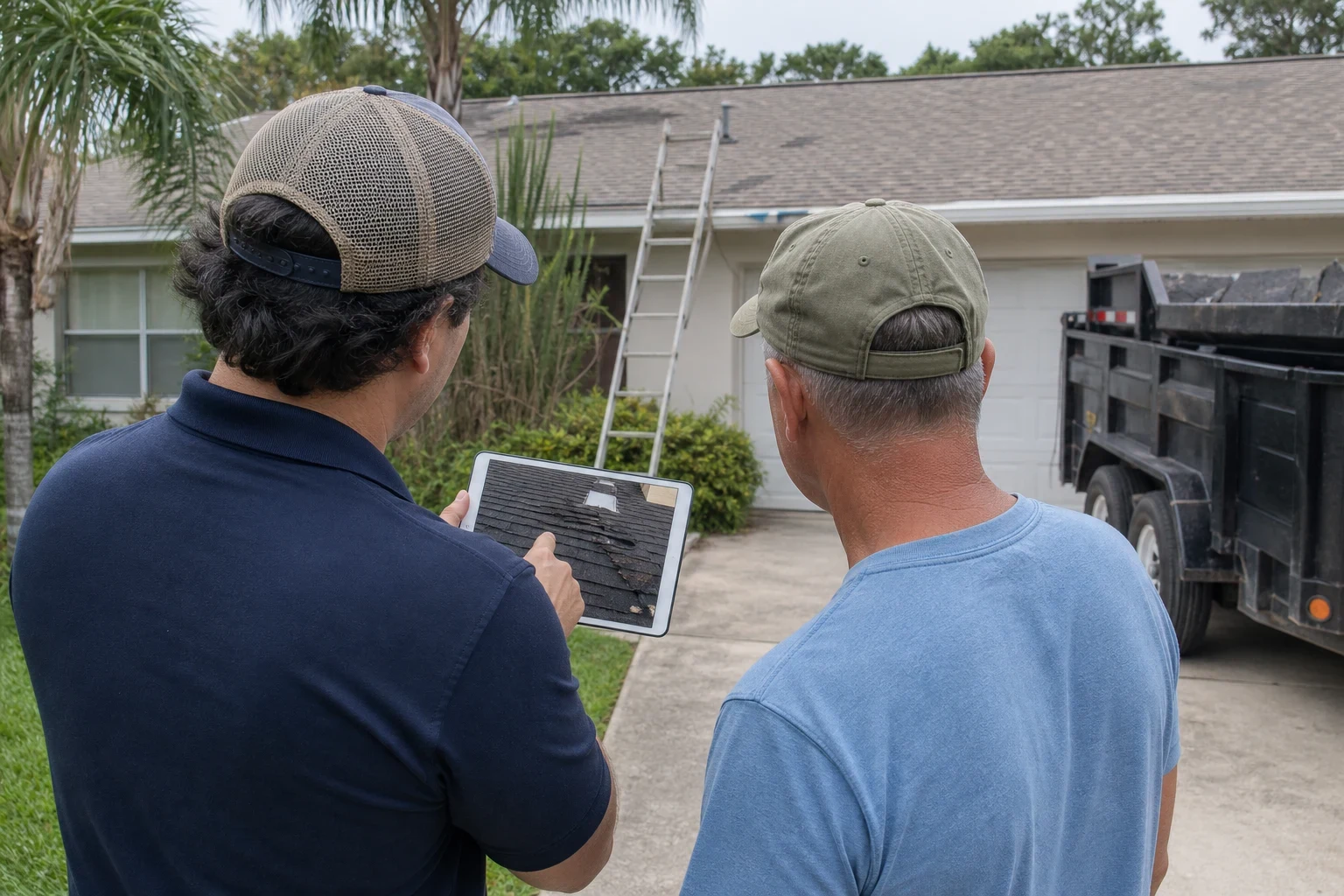
Roof Replacement Questions
How long does a roof replacement take?
A typical house roof is finished within one to three working days from the morning of tear-off. Heavy deck repair or a roof cut up by many valleys and dormers can stretch that. Weather is the main variable, and we will not tear off ahead of rain we can see coming.
Does someone have to stay home while you work?
Not necessarily. We like to go over the plan with you on the first morning and look at the finished roof together at the end. Tear-off and nailing are loud, and the driveway should stay clear of cars during working hours.
Will insurance pay for my new roof?
It depends on whether a covered event like wind damaged the roof, or whether it simply aged out. If there is storm damage, we work directly with your insurance adjuster and provide photos and measurements. The adjuster decides coverage, not us.
What warranty comes with the work?
Our installation is covered by a 5-year workmanship warranty. That covers how we installed the roof. Shingle or metal products also carry their own manufacturer coverage, which we go over with you.
Do you work outside Palm Valley?
Yes. We replace roofs in Nocatee, Sawgrass, Jacksonville Beach and other nearby communities, and our service areas page lists them.
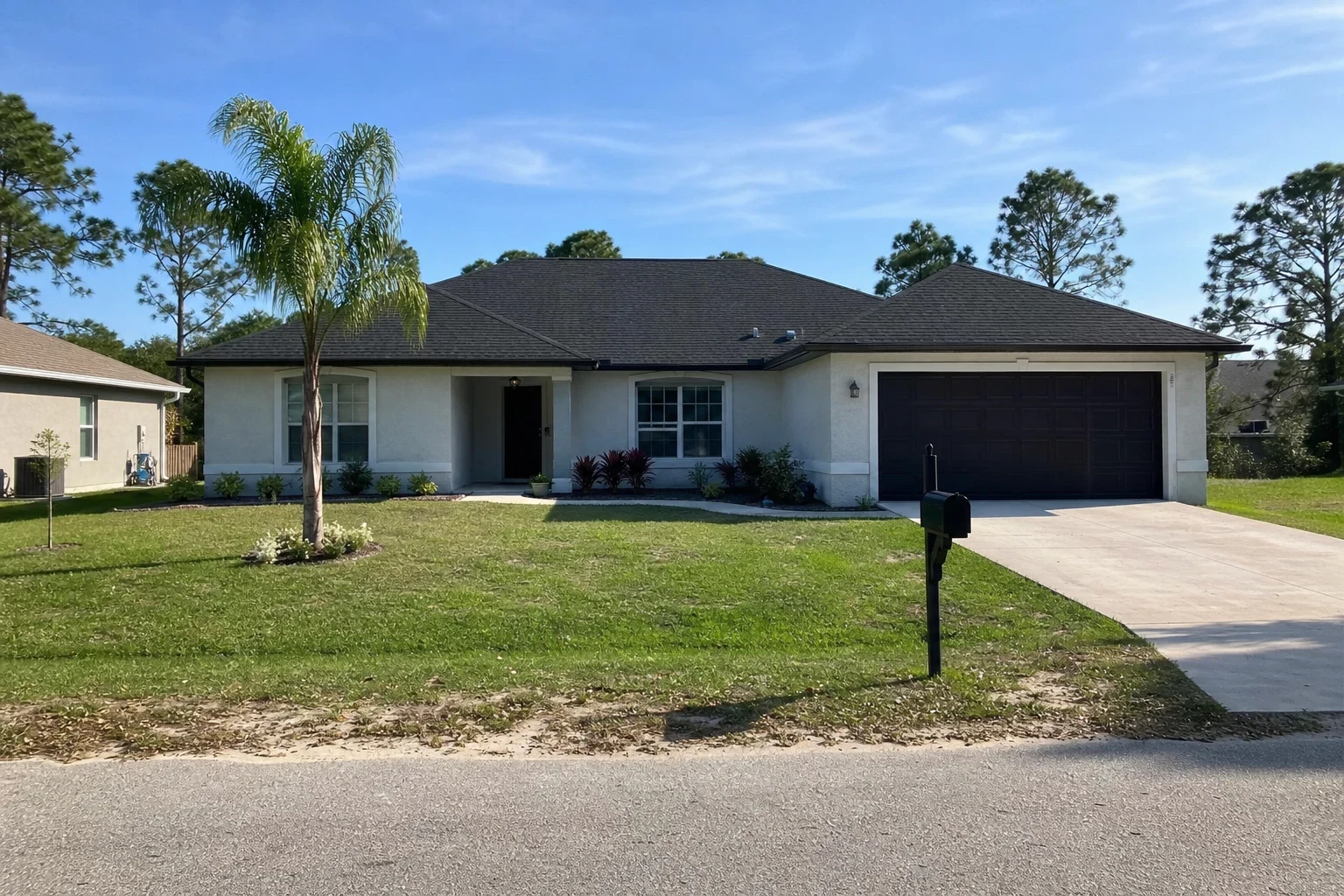
Find Out What Your Roof Needs
We will measure it, check the deck from the attic and tell you plainly whether replacement is the right move. If roof repair will hold for a few more years, we say so.