ServicesRoof Repair
Roof Repair in Palm Valley, Done by the Crew That Found the Problem
Most leaks start at a handful of parts: a cracked pipe boot, a loose run of step flashing, a shingle tab the wind pried up. We find which one failed, show you photos, and the same people who diagnosed it come back to fix it.
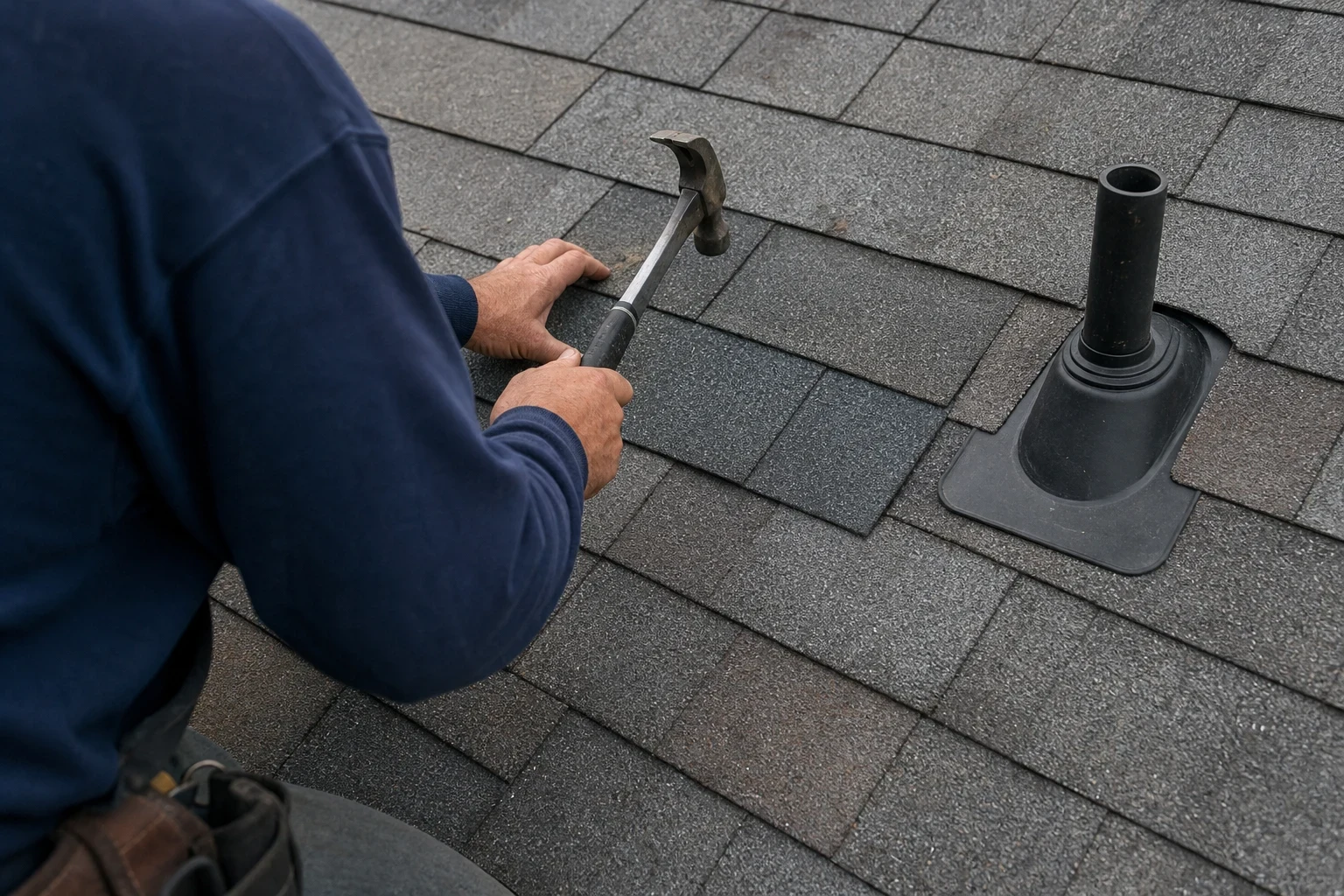
Repair or Replace: How We Decide
We start by judging the roof surrounding the damage, not just the damaged spot. If the shingles still flex without cracking, hold most of their granules and sit on decking that stays firm underfoot, a targeted fix will last. If whole slopes are brittle and bald, we say so plainly and walk you through roof replacement instead of selling a patch that buys a single season.
We're a small team, and we keep it that way on purpose. The person who climbs up to trace your leak is on the roof again on repair day, so nothing gets lost between an estimate writer and a crew that has never seen your home. We've been fixing roofs here since 1995, and as a licensed general contractor we handle the permit when a repair calls for one.
What Our Roof Repair Work Covers
- Leak tracing from the attic
- The spot on your ceiling is often several feet from where water actually gets in. Once it passes the shingles, it follows the underside of the decking and the slope of the rafters before it drips. We look for stained sheathing in the attic and work our way uphill to the true entry point.
- Pipe boots and vent flashing
- The neoprene collars around plumbing vents crack after years of strong sun, and that crack lets water slide straight down the pipe. We replace the boot or the vent flashing rather than smearing caulk over it, because caulk shrinks and fails within a few summers.
- Wall, chimney and valley flashing
- Where a roof meets a wall, each shingle course needs its own piece of step flashing tucked behind the wall covering, plus a kick-out at the bottom to throw water into the gutter. Missing kick-outs are one of the most common causes of rotted wall sheathing we find.
- Wind-lifted and missing shingles
- Once a shingle's sealant strip lets go, the tab flaps, creases and eventually tears off. We replace damaged shingles, hand-seal the surrounding tabs and match color and profile as closely as available stock allows.
- Soft or rotted decking
- If the plywood or OSB under a leak has gone spongy, we cut it back to the rafters, install new sheathing and lay fresh underlayment before the shingles go back on. Shingles nailed into rotted wood will not hold.
- Tile and metal spot repairs
- We replace cracked concrete or clay tiles and reset slipped ones, and on metal roofs we swap out backed-out screws and worn rubber washers. Larger metal work is covered on our Metal Roofing page.
Warning Signs Worth a Closer Look
A water ring that spreads with each storm
If a brown mark on the ceiling darkens or widens after an afternoon thunderstorm, water is reaching it every time it rains. Each round soaks a little more decking and drywall.
Gutters full of shingle grit
A new roof sheds a little loose grit in its first year. On an older roof, thick sandy drifts at the downspouts mean the asphalt beneath has lost its UV shield and is drying out quickly.
Creased or lifted tabs
A horizontal crease across a shingle tells you it has been lifting in the wind. It may still be on the roof, but its seal is gone and the next strong gust can take it.
Damp insulation or a musty attic
Wet spots on insulation, dark streaks on the underside of the decking or a mildew smell point to a slow leak or trapped moisture that never shows on the ceiling.
Old caulk patches everywhere
Tar smeared around vents and flashing is usually a sign someone chased a leak without fixing it. Those patches crack and need proper replacement parts.
Why Repair Prices Vary From Roof to Roof
A missing shingle over firm decking and a missing shingle over soaked plywood look identical from the street, yet the second costs more to fix. We can't tell which one you have until we've been up there, so we inspect first and write the price item by item, each line tied to a specific part. Financing is available if the repair turns out larger than you planned.
Pitch, height and access
The steeper and taller the roof, the more fall protection we rig and the more carefully each step has to be taken, which adds hours. Narrow side yards or a pool deck below can also change how we stage materials.
Roofing material
Shingle, tile and metal each need different parts and handling. Discontinued shingle colors or tile profiles can take extra time to source.
What's under the surface
Rotted decking, wet underlayment or damaged rafter tails add labor and material that nobody can see until the old shingles come off.
Permits and code
Larger repairs may need a permit, and the Florida Building Code limits how much of a roof section can be patched before the whole section must meet current code.
How a Repair Job Runs
- 1
Your call and a free estimate
Tell us what you're seeing and where. We set a time to come out and look, and the estimate costs you nothing.
- 2
Roof and attic inspection
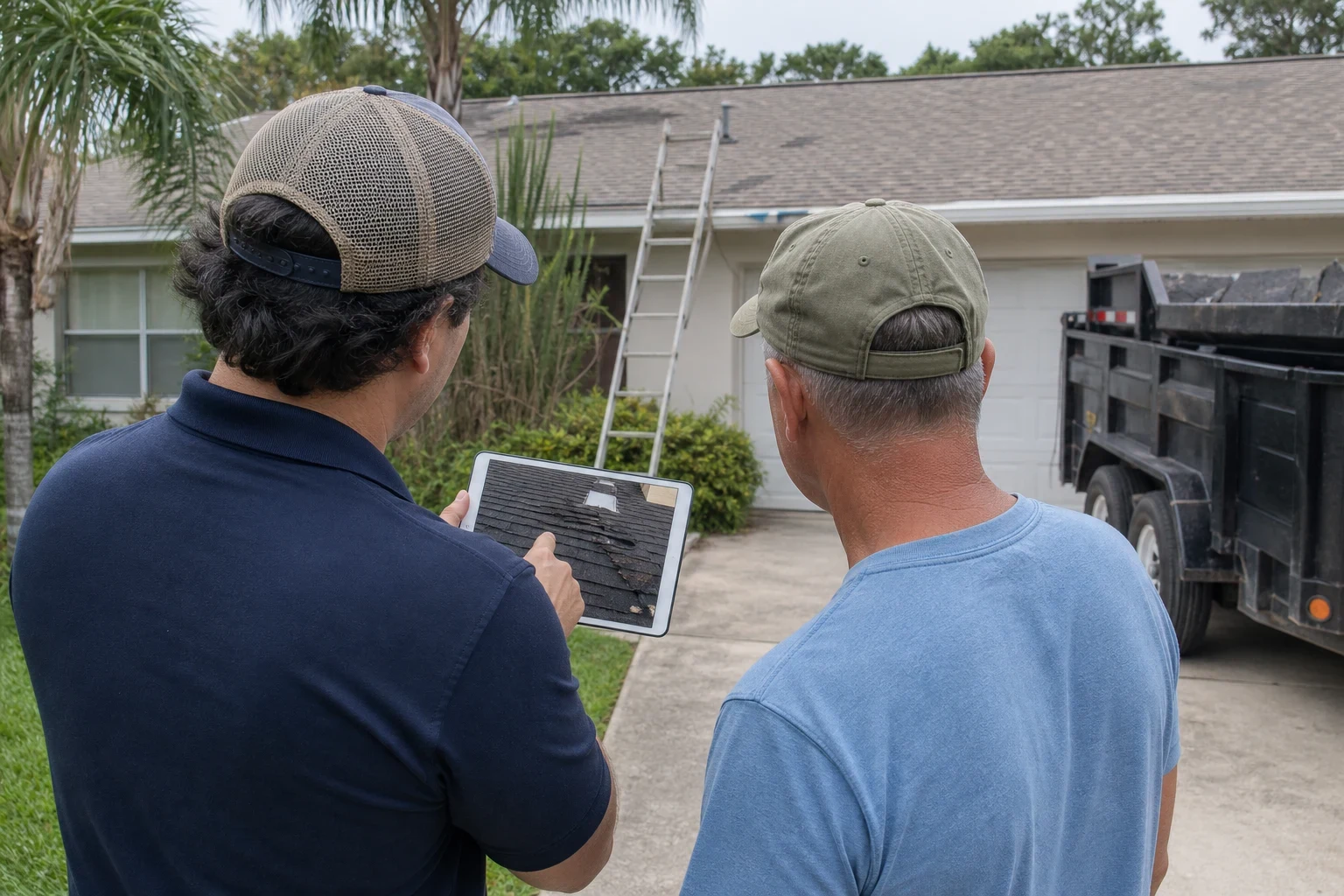
We go up on the roof and into the attic, photograph what failed and what's around it, and explain the cause in plain terms. You get a written scope that lists each repair item.
- 3
Repair day with the same people
The crew that inspected your roof does the work. Plants under the work area get covered, ladders go on stable footing, and before we pack up we sweep the lawn and driveway with a rolling magnet to pick up stray nails.
- 4
Photos of the hidden layers
Before we leave, you see the repaired area from the ground and in pictures taken before the new flashing, boots or underlayment were covered up. That repair carries our 5-year workmanship warranty.
Roof Repair Questions
Can you match my existing shingles?
Usually close, though rarely perfect. Shingle colors fade in the sun and manufacturers retire lines over time. We bring samples, compare them on your roof, and tell you before the work how visible the new section will be.
Will a repair hold, or am I just delaying a new roof?
On a roof with sound shingles and decking, a proper repair with new flashing or boots can last as long as the rest of the roof. If the shingles are brittle and losing granules everywhere, a repair is short-term, and we will say so. You get both options laid out so the choice is yours.
Will my insurance pay for the repair?
Policies generally cover sudden damage from wind or a falling limb, not wear and age. If weather caused the damage, our photos and inspection notes go to the person handling your claim, since we work directly with your insurance adjuster on storm damage claims. Our Storm Damage Repair page explains that process in more detail.
Do I need a permit for a roof repair?
Small repairs often don't, while larger sections of new decking or roofing usually do. When your repair requires one, we pull the permit ourselves and schedule the inspection, so you don't have to deal with the building department.
How many days will my repair take?
Swapping a cracked vent boot or replacing a handful of shingles is normally a one-visit job. Cutting out soft decking or reflashing a long wall run stretches that out. Once we've inspected, we tell you how many days to expect before anyone starts work.
Have That Stain or Loose Shingle Checked
Call and describe what you're seeing. We'll come out, find the part that failed, and give you a written scope before any work begins.