ServicesRoof Inspections
Roof Inspections in Palm Valley, From Ridge to Attic
We check every layer that keeps water out of your home: shingles or metal panels, flashing, pipe boots, valleys and the decking you can only see from the attic. You get photos, the cause behind each problem and a straight answer on what it needs.
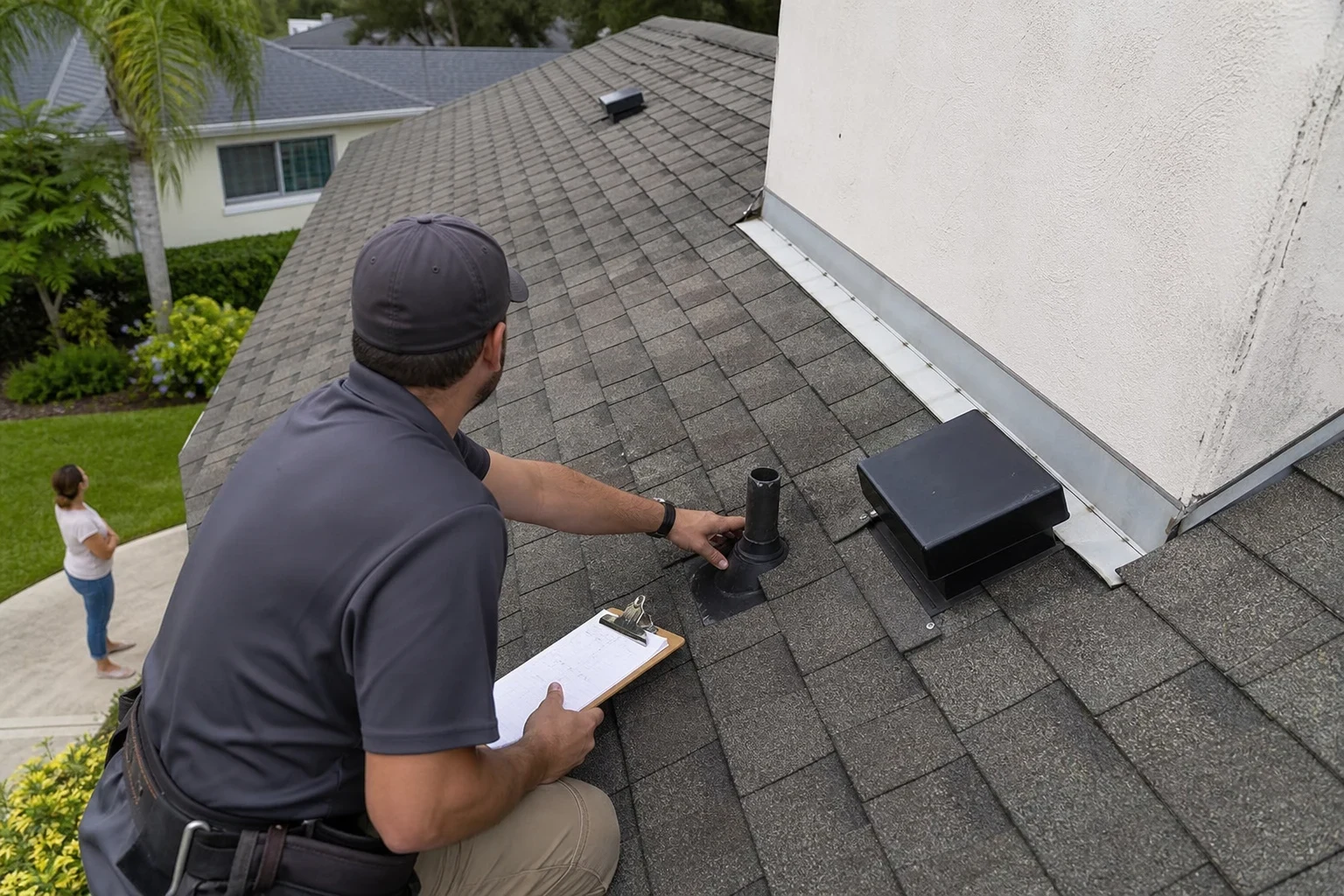
What a Real Roof Inspection Covers
A roof rarely fails all at once. It fails at a cracked pipe boot, a lifted shingle whose seal strip let go in a gust, or a strip of step flashing that was never lapped correctly against the wall. An inspection finds those points before the water reaches your ceiling, or confirms what a storm did when you can't tell from the yard.
The person who inspects your roof belongs to the same small crew that would handle any repair, so the findings come from someone who will stand behind them on the job. We are a licensed general contractor and have been in business since 1995.
You end the visit knowing one of three things: the roof needs nothing yet, it needs a specific repair, or it is time to plan for replacement.
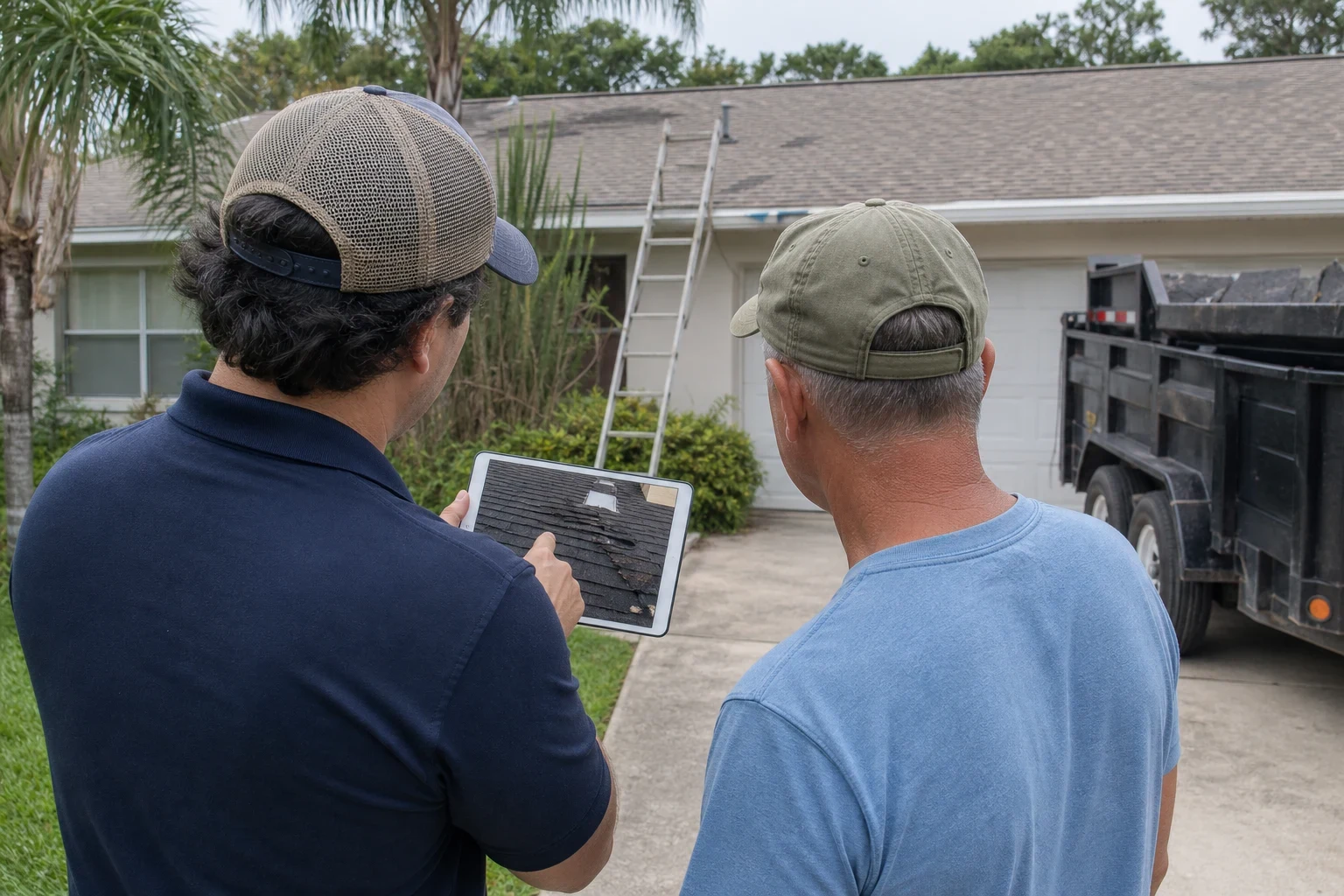
What We Check on Your Roof
- 01
Shingles and metal panels
On shingle roofs we look for granule loss, cracked or curled tabs, nail pops and broken seal strips. On metal roofs we check fastener tightness, dried-out neoprene washers and seam condition.
- 02
Flashing and penetrations
Pipe boots, chimney and wall flashing, skylight curbs and exhaust vents are where most leaks start. Rubber boot collars crack under constant UV, and sealant at flashing joints shrinks and splits long before the shingles wear out.
- 03
Valleys, eaves and drainage
We check valley metal for debris dams, look at the drip edge and fascia for rot, and see whether your gutters and downspouts are actually carrying water away from the roof edge and the foundation.
- 04
Attic and decking
With a flashlight in the attic, we scan the underside of the sheathing for pinholes of light, dark water trails, matted insulation and nail tips that have rusted. In humid coastal air, too little soffit intake or a clogged ridge vent holds moisture against the wood until it softens from the back side.
- 05
Photos and a ranked findings list
Every problem is photographed and explained by cause. We sort the list into what should be fixed now and what you can simply watch.
Questions about Roof Inspections?
Call(904) 675-1142When It Makes Sense to Have Your Roof Looked At
Water marks on ceilings or walls
A tan-edged ring or paint that blisters tells you water has already made it through the covering and the decking. Because water runs downhill along rafters, the entry point usually sits a few feet above where the mark shows.
Granules collecting in gutters
Asphalt shingles shed their protective granules as they age or after hail. Once the asphalt underneath is exposed, sun breaks it down quickly.
A strong wind event
A shingle can lift, break its seal strip and lie back down looking normal. It will lift again in the next storm, and that is when it tears off.
Cracked pipe boots or loose flashing you can see
If you can spot a split collar or a lifted flashing edge from the ground, the damage up close is usually worse.
An older roof or an insurer asking questions
If your roof is getting on in years, or your insurance company wants to know its condition, a documented inspection gives you facts to work from.
How Your Inspection Visit Runs
- 1
A short phone call
We ask about the roof's age and material, anything you've noticed inside, and any recent storm. Then we set a visit time that works for you.
- 2
The ground and eave walk
We start at ground level with the gutters, downspouts, fascia and soffit vents, then look at roof lines for sagging or uneven planes.
- 3
On the roof and in the attic
We walk the roof where it is safe to do so, hand-check seal strips and flashing, and feel for soft decking underfoot. Then we go into the attic with a light to see the underside of the same areas.
- 4
Findings, photos and next steps
We go through the photos with you and explain the cause of each issue. If something needs roof repair, storm damage repair or a roof replacement, you get a free, no-obligation estimate for that work.
What Shapes the Cost After an Inspection
There is no charge for a post-storm inspection or for the estimate that follows it. The number that matters is the price of any work we find, and that depends on the factors below. Financing is available when a job turns out bigger than you budgeted for.
- Roof size and pitch
- A steep roof needs harnesses and roof jacks and takes longer to work safely. More squares of roof mean more material and labor.
- Material on the roof
- Shingle repairs, metal panel work and flashing replacement each use different parts and methods, and matching existing materials can affect cost.
- Condition under the covering
- Soft or delaminated decking has to be cut out and replaced before anything goes back on top. We only know the full extent once the old material is off, and we tell you when that happens.
- Storm damage and insurance
- When damage comes from a storm, we work directly with your insurance adjuster and supply photos and findings. The adjuster decides what the policy covers.
- Permits and code
- Larger repairs and replacements need a permit and must meet the Florida Building Code. We include that step in the estimate so it is not a surprise later.
Roof Inspection Questions
Is the inspection really free?
Yes. Our post-storm inspections are free, and any estimate that follows is free with no obligation. You can take the findings and decide on your own time.
Do you need to get into my attic?
If there is a safe access hatch, yes. The attic shows leaks, rot and ventilation problems that can't be seen from the roof surface. We lay a drop cloth under the hatch before we go up.
Do I need to be home?
We can check the roof and gutters while you are out, but someone needs to be there for the attic. Most people like to be home for the walk-through of photos at the end.
Can your inspection help with an insurance claim?
It can. After a storm we photograph each damaged spot, from torn shingles to bent flashing, and note what caused it, so you have something concrete to show your insurer. We also work directly with your adjuster while the claim is open. Your insurance company makes the coverage decision, and we walk you through the steps without speaking for them.
How often should my roof be inspected?
Plan on one inspection each year, and add another after any storm that brings strong wind. Hurricane season runs June through November, so many owners book a check in late spring and again once a major storm has passed. Older roofs earn a closer schedule.
Is repair work after the inspection covered?
Yes. Work we do on your roof carries our 5-year workmanship warranty, and it is done by the same crew that inspected it.
Find Out Where Your Roof Stands
One visit gives you photos, causes and a plain list of what your roof needs. If nothing needs doing, we'll tell you that too.